Comfort Use Chin Support Collar Guide
Hebei JianHang Technology Co., Limited stands as a premier manufacturer and exporter of orthopedic and rehabilitation products in China. With deep expertise in research, design, and manufacturing, the company supports a wide global market with dependable orthopedic devices built for daily comfort and long-term recovery. Our mission is to create practical solutions that help people move with confidence, reduce discomfort, and regain quality of life.
We provide a broad range of products including cervical collars, shoulder supports, arm and elbow braces, wrist orthosis, posture correctors, hip and leg supports, lumbar belts, ankle supports, walking aids, wheelchairs, and rehabilitation devices. Each category is designed with a strong focus on comfort, durability, and practical performance.
Across hospitals, rehabilitation centers, sports clubs, and home users, we have developed long-term relationships based on quality, trust, and consistent service. Our products are increasingly used in routine care, workplace support, sports recovery, and home health scenarios. With a growing global demand for simple but effective rehabilitation tools, cervical support devices—especially soft and semi-rigid collars—play an important role in protecting neck health.
The chin support collar and other related neck support products have recently become hot topics due to rising concerns over posture problems, screen fatigue, long working hours, and recovery from minor injuries. This article discusses how these devices work and why they are so practical for everyday people.
Everyday Relief with a Comfortable Chin Support Collar
A chin support collar is one of the most commonly used cervical devices because of its simplicity and effectiveness. It offers basic support by keeping the chin and neck in a stable, neutral position. Many people experience neck tension after long hours of work, reading, driving, or using mobile devices. This tension builds up silently over time, eventually causing discomfort, stiffness, and sometimes headaches.
The chin support collar tackles these daily issues by lightly lifting the chin and reducing pressure on the cervical spine. It helps prevent the forward-head posture that many people develop without realizing it. This is especially useful for office employees, students, and anyone who spends extended periods looking down.
Its soft foam construction provides comfort without causing extra stress, and the breathable fabric prevents heat buildup even during extended wear.
For people who prefer a lightweight solution that doesn’t feel restrictive, this is a practical and user-friendly option. Many customers appreciate how easy it is to use: no complicated adjustments, no special knowledge, just wrap it around the neck and let it support the day. Because of its comfort, people often wear it during driving, working, watching TV, or reading.
Reliable Daily Stability Using a Neck Brace Chin Support
A neck brace chin support provides a higher level of stability compared to soft collars. It is useful for individuals who need to reduce neck movement but still want a shield that feels comfortable and easy to manage.
This type of brace is especially favored by people experiencing mild cervical strain, minor soft-tissue injury, or early-phase recovery after therapy. It restricts certain motions while still allowing people to go about their regular activities.
The chin section helps distribute pressure evenly, preventing sudden movements that could aggravate sensitive muscles or ligaments. This controlled movement is important for people who perform routine bending, turning, or lifting motions in their daily work. Even slight neck motion can hinder healing, so the consistent support from this brace is often recommended.
Healthcare professionals use it to manage temporary discomfort, and many patients feel noticeable relief from the very first day.
In addition, the brace is designed with adjustable straps, allowing each user to fine-tune its tightness based on comfort. Whether used for short recovery or long day-to-day protection, it remains an essential tool for many individuals.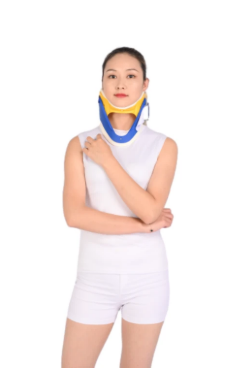
Balanced Support with a Cervical Collar Semi Rigid
A cervical collar semi rigid provides a higher level of structured support. This style of collar is useful for people who need more firmness than a soft collar can offer but still want a comfortable design they can wear for several hours.
Its semi-rigid frame stabilizes the cervical spine, helping reduce rotation, flexion, and extension. The collar ensures that the neck remains in the correct position, which promotes healing and reduces stress on recovering cervical structures.
This model is frequently used in rehabilitation clinics for moderate conditions such as chronic cervical strain, whiplash, early-stage disc issues, and recovery after medical procedures. The adjustable contour and padded interior make it suitable for extended use without causing discomfort or skin irritation.
Its balanced support is what users appreciate most. It doesn’t fully restrict movement like a rigid brace, but it reduces enough mobility to protect the neck. This balance allows people to continue daily routines with confidence.
For individuals transitioning between soft and rigid collars, this semi-rigid type serves as a comfortable, stable middle option.
Strong Protection and Firm Positioning with a Rigid C Collar
A rigid c collar is designed for situations requiring maximum cervical stabilization. This is typically used in emergency care, post-trauma conditions, or after certain surgical procedures. The rigid frame limits almost all movement, ensuring the spine stays aligned while healing occurs.
Medical teams rely on rigid collars during patient transport, injury handling, or early acute-care phases.
Despite the firmness, comfort is still an important part of the design. Modern rigid collars incorporate soft padded edges, chin support, and ventilation areas to reduce discomfort. While movement restriction is strong, proper cushioning ensures that users can wear the collar safely for recommended periods.
This collar is essential for preventing secondary injury caused by uncontrolled motion. For anyone requiring strict cervical protection, the rigid collar remains a trusted and medically accepted solution.
Chin Support Collar FAQs
As concerns about posture, screen time, and ergonomic health continue to rise, the chin support collar has gained popularity as a practical, affordable, and easy-to-use solution. If you are considering improving your cervical health, now is a great moment to explore our reliable product line. You are welcome to visit our official website, view specifications, and contact our team for professional guidance. With dependable quality and global service, we are ready to support your needs.
What situations benefit most from a chin support collar?
Daily neck fatigue, long screen hours, mild cervical strain, and posture-related tension benefit most from soft collar use.
Can I wear it at work or while driving?
Yes. Many people use it during office work, long drives, reading, or screen time to maintain neutral neck posture.
How long can I wear the collar in one day?
Most users wear soft collars for 1–3 hours at a time, depending on comfort and professional recommendations.
Are these collars suitable for travel?
Absolutely. Their lightweight and compact design makes them convenient for long flights, car rides, and business trips.
Where can I buy a chin support collar?
You can visit our official website anytime to view available models and place an order. Our experts are ready to offer suggestions based on your personal needs.
-
Thumb Spica Belt Guide for Thumb Stabilization and RecoveryNews Apr.16,2026
-
Soft Thumb Spica Guide for Effective Thumb Stabilization and HealingNews Apr.09,2026
-
Comprehensive Guide to Hand Spica Casts for Effective Injury RecoveryNews Apr.07,2026
-
Benefits of a Custom Thumb Spica for Optimal Hand RecoveryNews Apr.04,2026
-
Experience Ultimate Comfort Cool Thumb Spica for Wrist and Thumb SupportNews Mar.31,2026
-
Comprehensive Guide to Choosing the Right Youth Thumb Splint for Effective HealingNews Mar.28,2026