Arm Sling for Shoulder Sprain Recovery And Support
A shoulder sprain is not merely a temporary inconvenience; it represents a significant disruption to your daily life and physical well-being. The sharp, limiting pain is a clear signal from your body that the stabilizing ligaments of your shoulder joint have been overstretched or damaged. In these critical moments following injury, your actions directly influence the trajectory of your recovery. Providing the joint with the precise, therapeutic environment it needs is paramount, and this begins with choosing the correct support. A specialized arm sling for shoulder sprain is the foundational tool in this healing journey. Far more than a simple fabric carrier, it is an engineered orthopedic device designed to orchestrate recovery through intelligent immobilization, stabilization, and pain mitigation. This article serves as your comprehensive guide to understanding the indispensable role of a proper arm sling for shoulder sprain, detailing how its targeted support differs from devices used for other conditions like an arm sling for pulled muscle or an arm sling for shoulder replacement, and empowering you to make the best choice for a swift and complete return to function.
The pathophysiology of a shoulder sprain centers on the ligaments—the tough, fibrous bands that connect bone to bone and provide essential joint stability. When these ligaments are forced beyond their normal range, as happens in a fall, a sudden twist, or an impact during sports, micro-tears or more significant ruptures can occur. The immediate goals of treatment are clear: reduce inflammation, manage pain, and, most critically, prevent any movement that could exacerbate the injury, delay healing, or lead to chronic instability. This is where a properly fitted and designed arm sling for shoulder sprain proves its worth. By cradling the forearm and wrist, it performs the crucial task of mechanical unloading. It supports the full weight of the arm, eliminating the constant gravitational pull and muscular effort that would otherwise strain the damaged ligaments and the surrounding joint capsule. This enforced rest is not passive; it is an active therapeutic intervention that creates the optimal, protected conditions for the body's innate repair processes to work efficiently. Understanding this principle is key, as it highlights the distinct purpose of a sprain-specific sling compared to an arm sling for pulled muscle, which may prioritize compression and gentle mobility for muscular tissue, or an arm sling for shoulder replacement, which is part of a rigorous, non-negotiable post-surgical protocol demanding absolute immobilization.
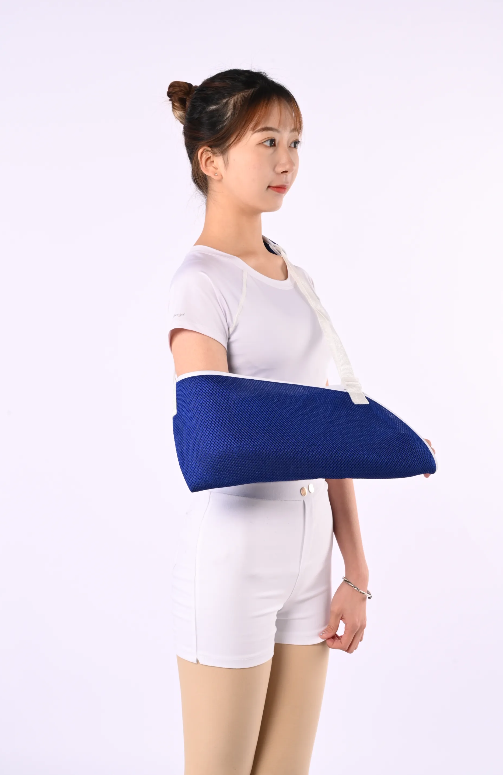
The Foundational Role of an Arm Sling for Shoulder Sprain Management
The immediate and correct application of an arm sling for shoulder sprain is the cornerstone of effective conservative management. Its function is multi-faceted and profoundly therapeutic. Primarily, it delivers pain relief through mechanical unloading. By suspending the weight of the arm, the sling alleviates the constant tensile stress on the inflamed and injured ligaments. This reduction in mechanical strain can lead to a significant decrease in pain perception, often reducing reliance on pain medication in the early stages and allowing for more restful sleep, which is itself crucial for healing.
Beyond pain management, the sling’s most critical role is to enforce immobilization and stabilization. Uncontrolled or inadvertent movement of an acutely sprained shoulder can cause further micro-tearing at the injury site, increase local hemorrhage and edema, and significantly raise the risk of developing long-term joint laxity or chronic instability. A well-fitted arm sling for shoulder sprain acts as a guardian, limiting specific ranges of motion—particularly abduction and external rotation—that are most stressful to the healing ligaments. This creates a controlled, protected microenvironment conducive to optimal tissue repair. It helps prevent a simple, acute sprain from evolving into a complex, persistent condition that could require more invasive interventions later.
Furthermore, the sling provides considerable behavioral and psychological benefits. It serves as a tangible, constant reminder for the wearer to consciously protect the injured limb, thereby reducing the likelihood of subconscious, harmful movements during daily tasks. It also communicates the presence of an injury to others, prompting more cautious interaction. It is important to recognize that while an arm sling for pulled muscle may share a similar appearance, its therapeutic intent is often different, focusing more on comfort, compression, and accommodating a gentle range of motion rather than the strict motion restriction paramount for ligament healing in a sprain scenario.
Differentiating Support: Arm Sling for Pulled Muscle vs. Shoulder Replacement
To fully appreciate the specialized design of an arm sling for shoulder sprain, it is essential to understand the spectrum of shoulder support and how needs vary dramatically by diagnosis. This knowledge prevents the critical error of using an ill-suited device, which can hinder recovery. An arm sling for pulled muscle (or strain) addresses damage to the contractile soft tissues—the muscle fibers and their tendons. The management priorities for a muscular strain often include dynamic compression to manage swelling and provide proprioceptive feedback, mild supportive containment to avoid painful over-stretching, and in many rehabilitation protocols, the encouragement of careful, controlled early movement to maintain tissue pliability and promote circulation. Consequently, slings designed for this purpose may utilize more elastic, conforming materials and feature simpler adjustment systems that allow for a greater, more comfortable degree of arm positioning and mobility.
In stark contrast, an arm sling for shoulder replacement exists within a highly regimented post-operative framework. Following major arthroplasty surgery, the integrity of the new prosthetic joint and the meticulously repaired soft tissues (such as the reattached rotator cuff tendons) is absolutely paramount. The device used here transcends the concept of "support"; it is a strict, prescribed immobilization orthosis. It is engineered to hold the arm in a very specific, often slightly abducted and internally rotated position for weeks, as dictated by the surgeon, to protect the delicate surgical repair during the most vulnerable phase of healing. These slings are structurally more rigid, frequently incorporate abduction pillows or blocks, and feature multiple securing straps to ensure zero unwanted movement. Understanding this continuum—from the flexible, movement-permissive support for a muscle strain, to the balanced stabilization-immobilization required for a ligament sprain, to the absolute rigidity mandated after a joint replacement—underscores why a precise, diagnosis-driven selection is non-negotiable for safe and effective recovery.
Selecting the Optimal Arm Sling for Shoulder Sprain Recovery
Choosing the correct arm sling for shoulder sprain is a decision that directly impacts comfort, patient compliance, and ultimately, clinical outcomes. Several key features must be evaluated to ensure the device fulfills its therapeutic role effectively. Foremost among these is universal adjustability. A high-quality sling will offer multiple, independent points of adjustment: at the neck collar to distribute load comfortably, across the body strap to secure the arm against the torso, and at the forearm cuff to fine-tune the angle and height of the limb. This ensures a truly customized fit that positions the hand at the optimal level (generally at or slightly above the heart to reduce edema) without creating pressure points on the neck or compromising circulation to the hand.
Material science and ergonomic comfort are equally critical for the medium to long-term wear required for sprain recovery. The ideal sling is constructed from breathable, hypoallergenic, and moisture-wicking fabrics to prevent skin maceration, heat buildup, and allergic reactions. Ample, dense padding on the neck strap and along all edges that contact the body is essential to prevent chafing and nerve compression. The design must intelligently distribute the arm's weight across the strong bony structures of the contralateral shoulder and the upper back, rather than allowing it to dig solely into the side of the neck. While an arm sling for shoulder replacement prioritizes unyielding structural integrity and an arm sling for pulled muscle may favor minimalist, flexible materials, the perfect sling for a sprain finds the harmonious balance: robust and stable enough to provide meaningful immobilization, yet ergonomically sophisticated enough to be tolerated for extended periods, ensuring the patient keeps it on as prescribed.
Beyond these fundamentals, enhanced functional features can significantly improve the user experience and therapeutic value. A quick-release buckle system allows for easy donning and doffing with one hand, a vital convenience. Some advanced models integrate a removable abduction pillow or a rotational control strap, adding a layer of stabilization for specific ligament injury patterns. Practical additions like a small storage pocket or reflective safety strips for visibility further enhance utility. The ultimate arm sling for shoulder sprain is one that patients find easy to use, comfortable to wear, and effective in relieving their symptoms—thereby fostering the adherence necessary for successful healing.
Protocol and Best Practices for Arm Sling for Shoulder Sprain Usage
Optimal recovery hinges not only on selecting the right arm sling for shoulder sprain but also on employing it correctly throughout the healing timeline. Initial fitting, ideally supervised by a healthcare professional, is crucial. The forearm should rest fully in the pouch, with the elbow bent at approximately 90 degrees. The hand should be elevated, with fingers visible to permit regular checks for color, warmth, and sensation—key indicators of proper circulation. The padded neck strap must be adjusted so the weight is borne by the trapezius muscle and the opposite shoulder, not the cervical spine.
A standard wearing protocol for an uncomplicated sprain involves near-continuous use for the first 5-7 days, removing the sling only for careful hygiene and prescribed gentle pendular exercises. As inflammation subsides, wear time can be gradually reduced, using the sling situationally during activities that risk re-injury or for comfort during sleep. This phased, responsive approach is distinctly different from the mandatory, unwavering schedule governing an arm sling for shoulder replacement, or the more symptom-driven, intermittent use that might characterize an arm sling for pulled muscle. Consistent, proper sling use, when combined with a progressive rehabilitation program guided by a physiotherapist—progressing from passive motion to active-assisted exercises, and finally to strengthening—forms the proven formula for restoring full, pain-free shoulder function and preventing recurrent instability.
|
Model Number |
JH3101 |
|
Sizes: |
CH/S/M/L/XL |
|
Color: |
Blue/Black |
|
Min.Order Quantity: |
500pieces |
|
Supply Ability: |
1000000pieces/month |
|
Port: |
Tianjin,Beijing,Yiwu,Guangzhou |
|
Payment Terms: |
T/T,L/C,Paypal |
About Arm Sling for Shoulder Sprain Recovery and Support FAQs
How does an arm sling for shoulder sprain differ from one for a pulled muscle?
The difference lies in their core therapeutic objectives and design. An arm sling for shoulder sprain is engineered primarily for ligament stabilization and strict motion restriction. Its design features focus on creating a secure, non-stretch cradle for the forearm, often with rigid or semi-rigid strapping systems to lock the arm in a specific, therapeutic position (hand elevated) and minimize shoulder girdle movement. It acts like a protective external ligament. Conversely, an arm sling for pulled muscle is designed with muscular tissue in mind. Its priorities are compression to reduce swelling, conforming support to ease strain on the injured muscle, and often allowing a controlled degree of movement to prevent stiffness and atrophy. It may use more elastic materials and simpler adjustments. Using a muscle-focused sling for a ligament sprain may not provide sufficient immobilization, potentially prolonging recovery.
What are the key advantages of using a specialized arm sling for shoulder sprain?
A specialized arm sling for shoulder sprain offers three paramount advantages that generic supports lack. First, Targeted Therapeutic Immobilization: It is designed to restrict the specific planes of motion (like abduction/external rotation) that are most harmful to healing ligaments, providing a protected healing environment. Second, Optimal Biomechanical Unloading: Through adjustable, ergonomic design, it effectively supports the arm's weight off the injured joint, reducing pain and mechanical stress at the injury site. Third, Enhanced Compliance and Comfort: Features like wide padded neck straps, breathable fabrics, and multiple adjustment points make it tolerable for the extended wear necessary for ligament healing, ensuring patients are more likely to follow their prescribed wearing schedule, which is a direct predictor of recovery success.
Can the same arm sling for shoulder replacement surgery?
No, absolutely not. An arm sling for shoulder sprain is not appropriate or safe for use following a shoulder replacement procedure. Post-operative management requires an arm sling for shoulder replacement, which is a specialized orthosis often called an abduction pillow or immobilizer. These devices are prescribed by the surgeon to hold the arm in a precise, often abducted position to protect the repaired soft tissues (like the rotator cuff) and the new prosthetic joint. They are structurally different, typically more rigid, and include features like an abduction wedge that a standard sprain sling does not have. Using an incorrect sling post-surgery could compromise the surgical outcome, leading to instability, poor healing, or even prosthetic failure.
How long should I typically wear an arm sling for shoulder sprain?
For a moderate (Grade II) shoulder sprain, a typical wearing protocol involves near-continuous use for the first 1 to 2 weeks, removing it only for hygiene and prescribed gentle exercises. Following this initial period, as pain and swelling diminish, your doctor or physiotherapist will guide a weaning process. You may transition to wearing the arm sling for shoulder sprain only during activities that risk re-injury (e.g., crowded spaces, commuting) or at night for an additional 2-4 weeks. Total support time can range from 3 to 6 weeks depending on healing progress. It is crucial to follow your healthcare provider's specific instructions, as returning to full activity too soon without protective support is a common cause of re-injury and chronic instability.
What should I do if my arm sling for pulled muscle causes numbness or increased pain?
If your arm sling for shoulder sprain causes persistent numbness, tingling, a cold feeling in your hand, or a significant increase in pain, you should immediately loosen or remove it and consult your healthcare provider. These symptoms can indicate that the sling is too tight, improperly positioned, or compressing a nerve or blood vessel. Before seeking help, you can try readjusting all straps to ensure they are snug but not constricting, checking that your hand is positioned at heart level, and ensuring the weight is on your shoulder/back, not your neck. However, persistent symptoms require professional evaluation to ensure proper fit and rule out other complications. Discomfort from initial adjustment is normal; neurological or vascular symptoms are not.
-
Thumb Spica Belt Guide for Thumb Stabilization and RecoveryNews Apr.16,2026
-
Soft Thumb Spica Guide for Effective Thumb Stabilization and HealingNews Apr.09,2026
-
Comprehensive Guide to Hand Spica Casts for Effective Injury RecoveryNews Apr.07,2026
-
Benefits of a Custom Thumb Spica for Optimal Hand RecoveryNews Apr.04,2026
-
Experience Ultimate Comfort Cool Thumb Spica for Wrist and Thumb SupportNews Mar.31,2026
-
Comprehensive Guide to Choosing the Right Youth Thumb Splint for Effective HealingNews Mar.28,2026